
Crowns & bridges
A crown is a custom-made cap that covers a damaged tooth to protect it and restore its shape. A bridge uses crowns to replace a missing tooth.
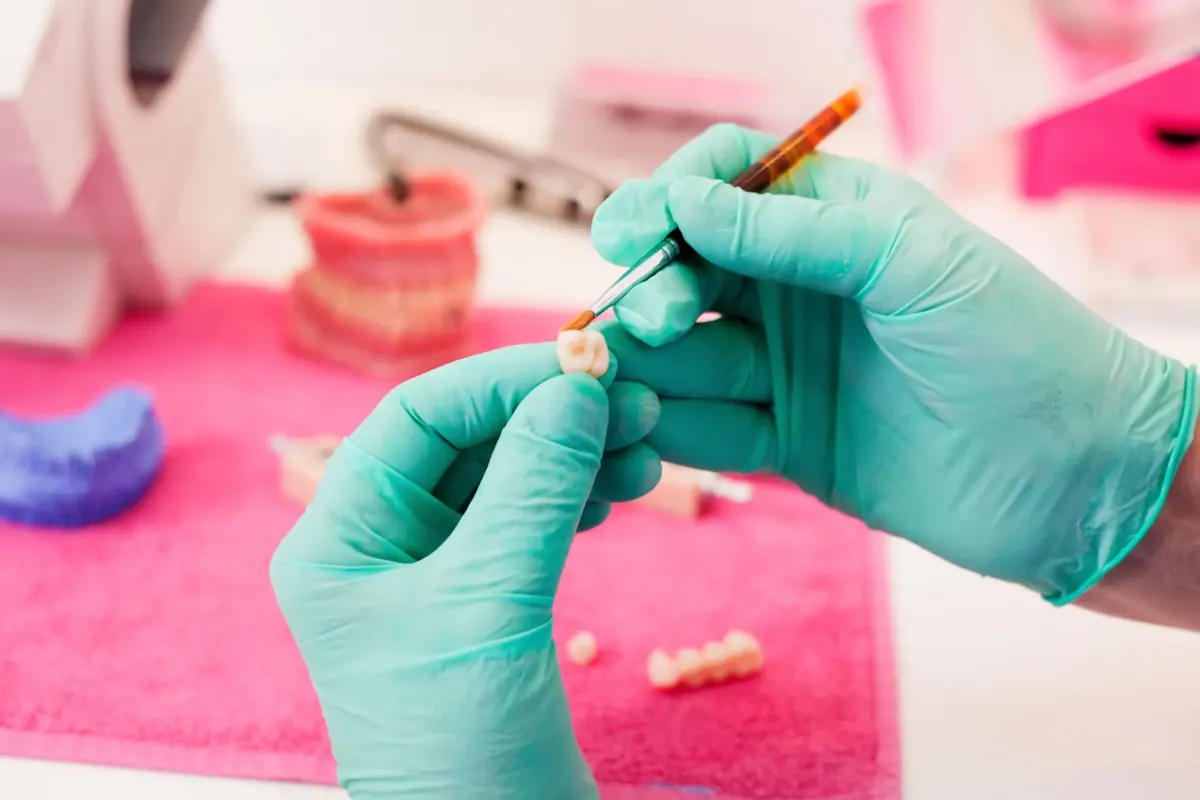
What is a dental crown?
A crown covers the whole visible part of a tooth, above the gum. It holds a weakened tooth together, protects it from breaking, and restores its shape and bite. Crowns are made to match the shape and colour of your other teeth.
When might you need a crown?
- A large cavity or an old filling that leaves too little tooth for another filling
- A cracked or broken tooth
- A back tooth that has had root canal treatment and has become brittle
- Teeth that are badly worn, for example from grinding
- A tooth that is badly discoloured or misshapen
- To cover a dental implant, or to support a bridge
If a filling or an onlay (a partial crown) can protect the tooth, we'll tell you. A full crown isn't always needed.
Crown materials
- All-ceramic (including zirconia)
- Tooth-coloured and metal-free. Suitable for front and back teeth, depending on the material and your bite.
- Porcelain fused to metal
- A metal core covered with tooth-coloured porcelain. Strong, though a thin dark line can sometimes show at the gumline over time.
- Gold and other metals
- Very durable and gentle on opposing teeth, but not tooth-coloured. Sometimes chosen for back teeth.
We'll recommend a material based on where the tooth is, how you bite, and what matters to you, and explain the cost of each option.

Bridges
A bridge replaces one or more missing teeth. A false tooth is joined to crowns on the teeth on either side of the gap, and the whole bridge is cemented in place. Bridges can also be supported by implants. We'll go over the options for a missing tooth with you: an implant, a bridge or a partial denture, with the pros and cons of each.
Signs it's time to see us
- A tooth that hurts when you bite, or feels like it might be cracked
- A large filling that has broken or keeps coming loose
- A back tooth that had a root canal and was never crowned
- A crown that is loose, chipped or decayed around the edge
- A gap from a missing tooth
What happens when you get a crown
- Preparing the toothThe tooth is frozen, any decay or old filling is removed, and the tooth is shaped so the crown can fit over it.
- Scan or impressionWe record the shape of the tooth and your bite, and match the colour to your neighbouring teeth.
- Temporary crownA temporary crown protects the tooth while the final crown is made at a dental laboratory, usually over two to three weeks.
- Final crownAt a second visit we check the fit, colour and bite, then cement the crown in place.
Thinking about whitening? Do it before your crown is made. Crowns don't change colour with whitening, so we match the crown to your whitened teeth.
Looking after your crown
With a temporary crown, avoid sticky and hard foods on that side and slide floss out sideways rather than pulling it up. After the final crown, mild sensitivity for a week or two is normal. Call us if your bite feels high.
A crowned tooth can still decay where the crown meets the tooth, so brush twice a day, clean between your teeth daily, and keep your regular check-ups. If you grind your teeth, a night guard can help protect your crowns. How long a crown lasts depends on the material, your bite, your habits and how well the tooth is cared for.
Common questions
Does getting a crown hurt?
The tooth is frozen while it is prepared, so most people feel pressure rather than pain. Some tenderness of the gum for a day or two is common.
How many visits does a crown take?
Usually two: one to prepare the tooth and fit a temporary crown, and one to place the final crown a few weeks later.
What if my temporary crown comes off?
Keep it and call us. We'll re-cement it. Don't use household glue.
Is a crown covered by insurance?
Many plans cover crowns in part, often as major treatment. We give you a written estimate and can send a predetermination to your insurer first.
Will my crown look natural?
We match the shape and colour to your neighbouring teeth, and you can see it before it's cemented.
Dr. Anahita Azadi Boroujeni, DDS, Dr. Cynthia Simon, DMD, and Dr. Kyra de Gouw, DMD, are general dentists registered with the Royal College of Dental Surgeons of Ontario. This page is general information. Your treatment is planned after an examination.