
Gum health & gum disease
Healthy gums hold your teeth in place. We screen for gum disease at every check-up, treat it early with deep cleaning, and help you keep it stable for the long term.
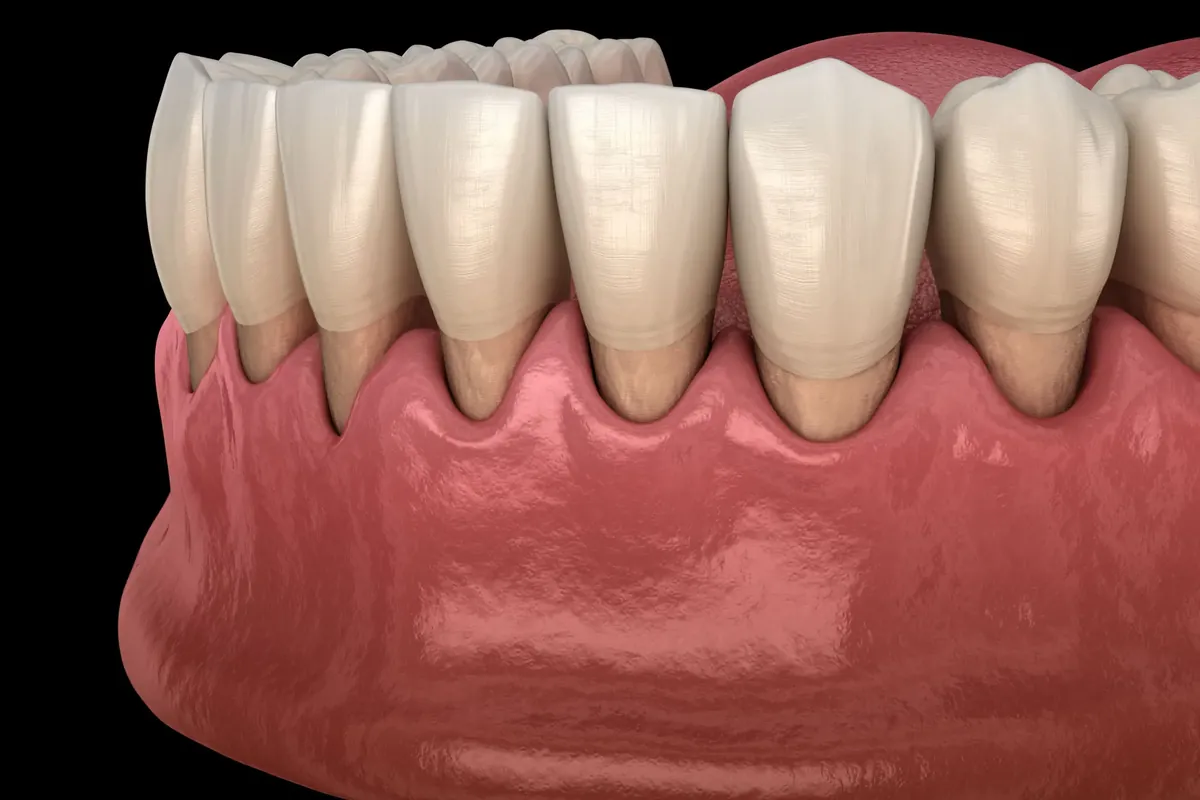
What it is
Gum (periodontal) disease starts when plaque builds up along the gumline. The gums turn red and bleed easily. Left untreated, the infection can break down the bone and tissue that support the teeth, which can lead to loose teeth and tooth loss.
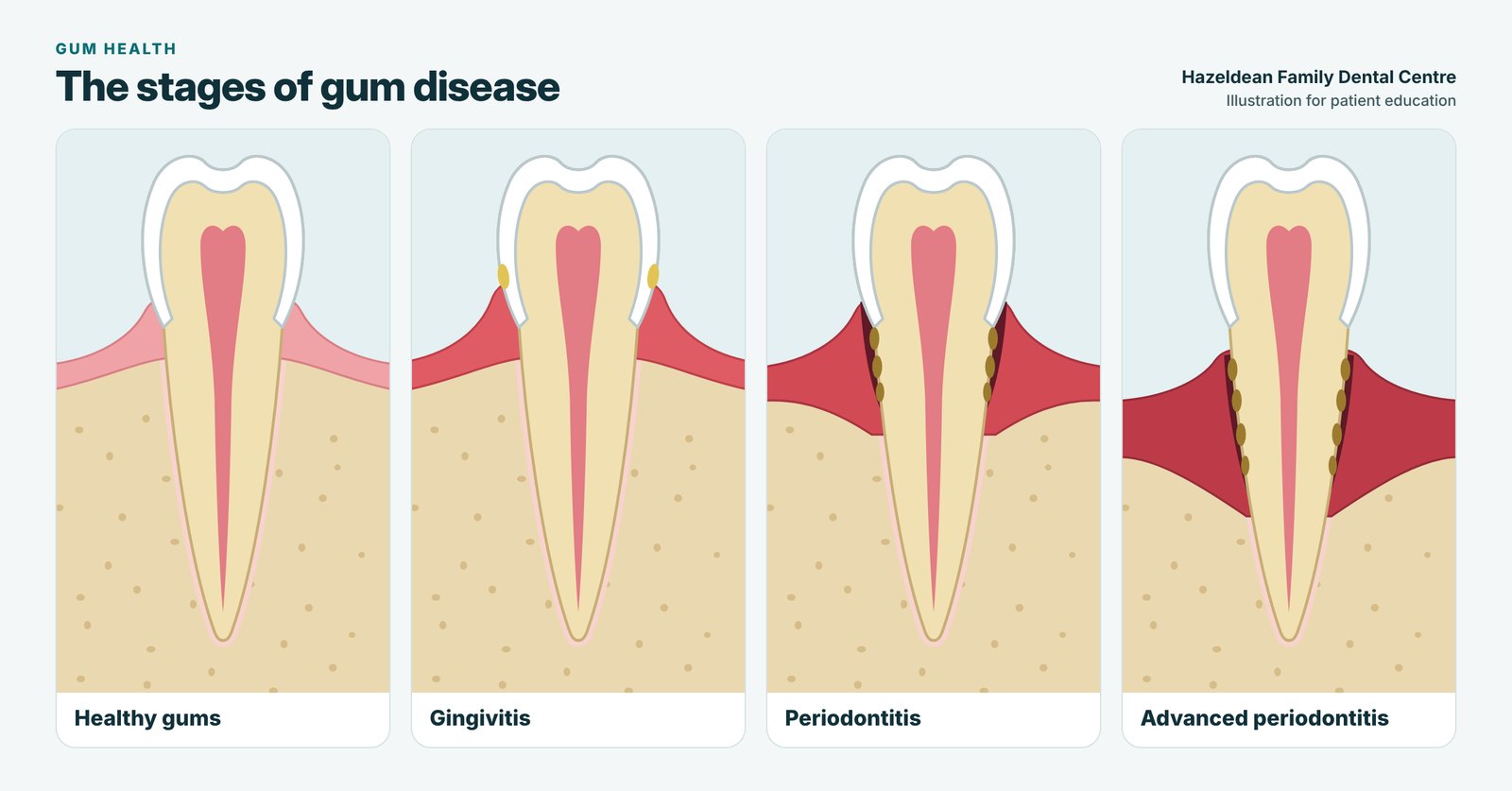
- Gingivitis
- Red, swollen gums that bleed easily. At this stage, the damage is usually reversible with professional cleaning and good home care.
- Periodontitis
- The infection has started to destroy the attachment and bone around the tooth, forming deeper pockets.
- Advanced periodontitis
- More bone has been lost, and teeth may loosen or drift. Treatment aims to stop it progressing and keep the teeth you have.
Our gum treatments
- Periodontal screening
- Measuring the gum pockets around each tooth at your check-up, so changes are caught early.
- Deep cleaning (scaling and root planing)
- Cleaning below the gumline to remove hardened deposits, usually with freezing and often over two visits.
- Periodontal maintenance
- Cleanings every three to four months to keep treated gum disease stable.
- Gum grafting
- Adding gum tissue where the gum has receded. More about gum recession and grafting, with before-and-after photos.
- Crown lengthening
- Reshaping the gum and bone so a broken tooth has enough structure to be restored.
- Gum contouring
- Evening out an uneven or "gummy" gumline.
Who it can help
- Your gums bleed when you brush or floss
- Your gums look red or swollen, or are pulling back
- You have bad breath or a bad taste that won't go away
- Teeth feel loose or your bite has changed
- You've been told you have deep pockets or bone loss
You don't need a referral. You can book a gum assessment with us directly.
What happens with deep cleaning
- AssessmentWe measure the pockets around each tooth and take x-rays to check the bone.
- Deep cleaningUnder freezing, we clean below the gumline to remove plaque and tartar from the roots, often over two visits.
- Re-checkA few weeks later we measure the pockets again to see how your gums have responded.
- MaintenanceRegular maintenance cleanings, often every three to four months, help keep gum disease stable.
Recovery and aftercare
After deep cleaning, gums may be tender and teeth sensitive for a few days. Bleeding should reduce as the gums heal. Keep brushing gently twice a day and clean between your teeth daily.
Common questions
Is gum disease reversible?
Gingivitis, the early stage, usually is, with professional cleaning and good home care. Periodontitis, where bone has been lost, can't be fully reversed, but it can be controlled so it stops getting worse.
Why do my gums bleed when I floss?
Bleeding is usually a sign of inflammation from plaque along the gumline. It often settles within a couple of weeks of daily flossing. If it doesn't, book a check-up so we can look for gum disease.
How often will I need cleanings after treatment?
Many people with treated gum disease do best with maintenance cleanings every three to four months. We'll recommend an interval based on how your gums respond.
Is gum health linked to general health?
Research has found links between gum disease and conditions such as diabetes and heart disease. Keeping your gums healthy is part of looking after your overall health.
Dr. Anahita Azadi Boroujeni, DDS, Dr. Cynthia Simon, DMD, and Dr. Kyra de Gouw, DMD, are general dentists registered with the Royal College of Dental Surgeons of Ontario. This page is general information. Your treatment is planned after an examination.