
Patient resources
Plain-language guides and printable brochures about treatment and caring for your teeth at home.
Brochures
Printable guides to some of the treatments we provide.
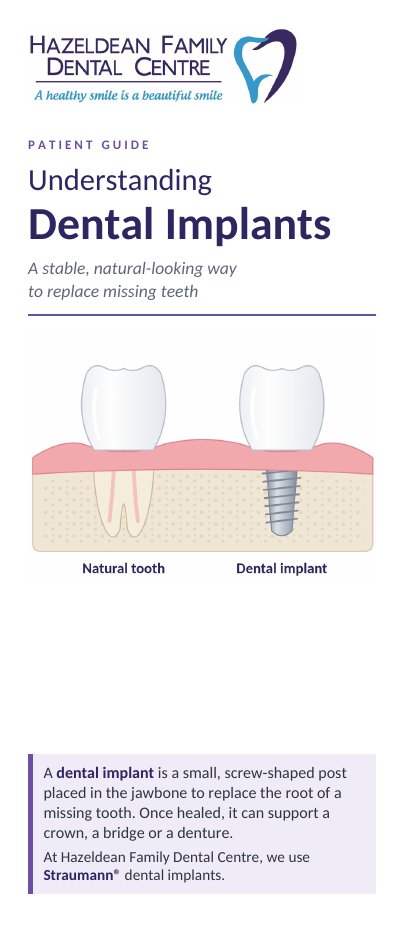
Understanding Dental Implants
How implants work, your treatment journey, who is a candidate, risks, and caring for your implant.
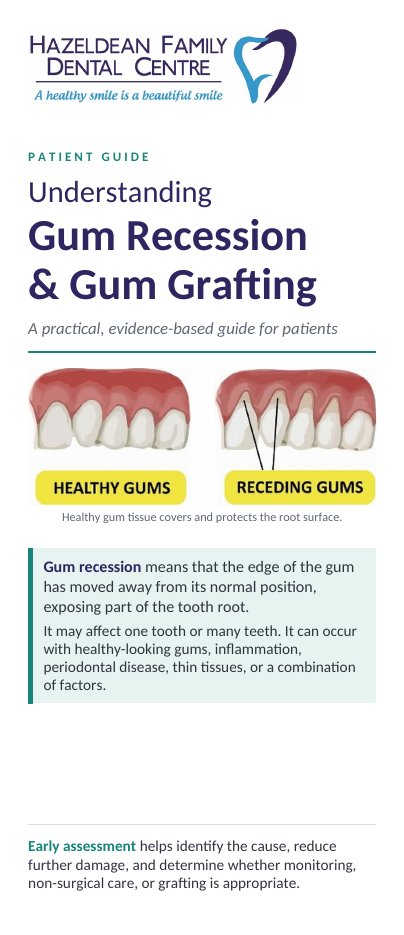
Understanding Gum Recession & Gum Grafting
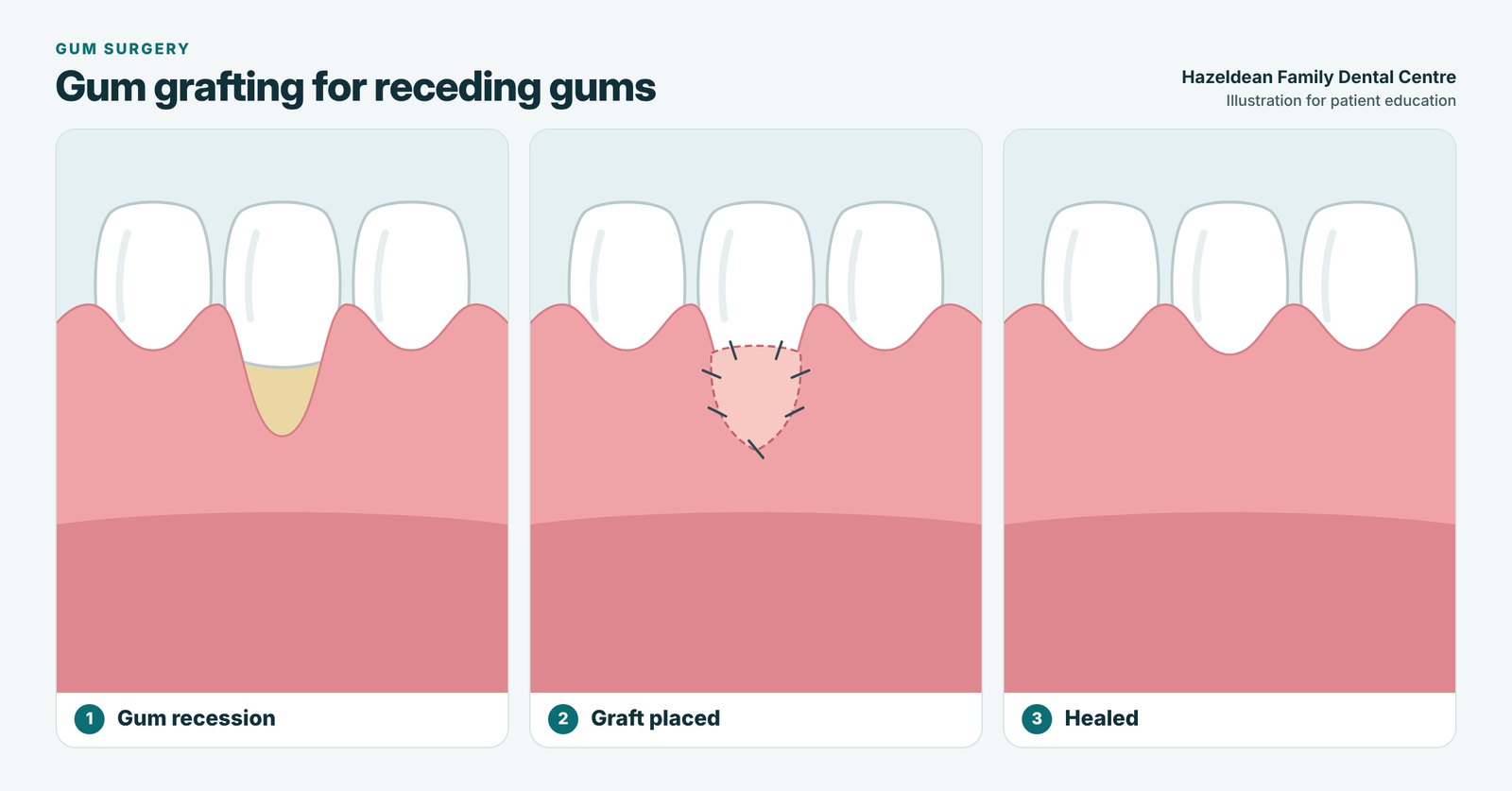
Why gums recede, the problems it can cause, how grafting works, and what results to expect.
Illustrations
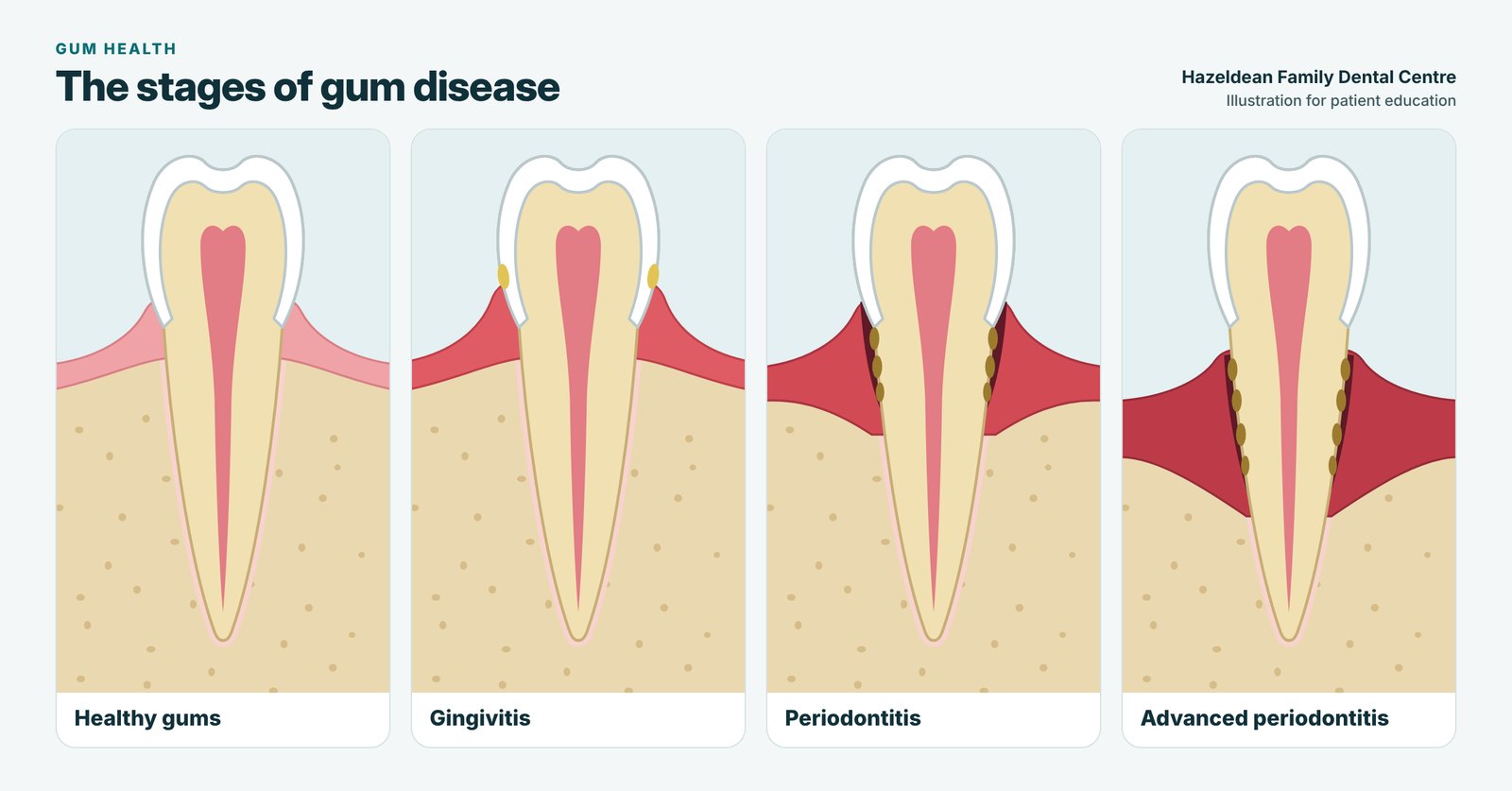
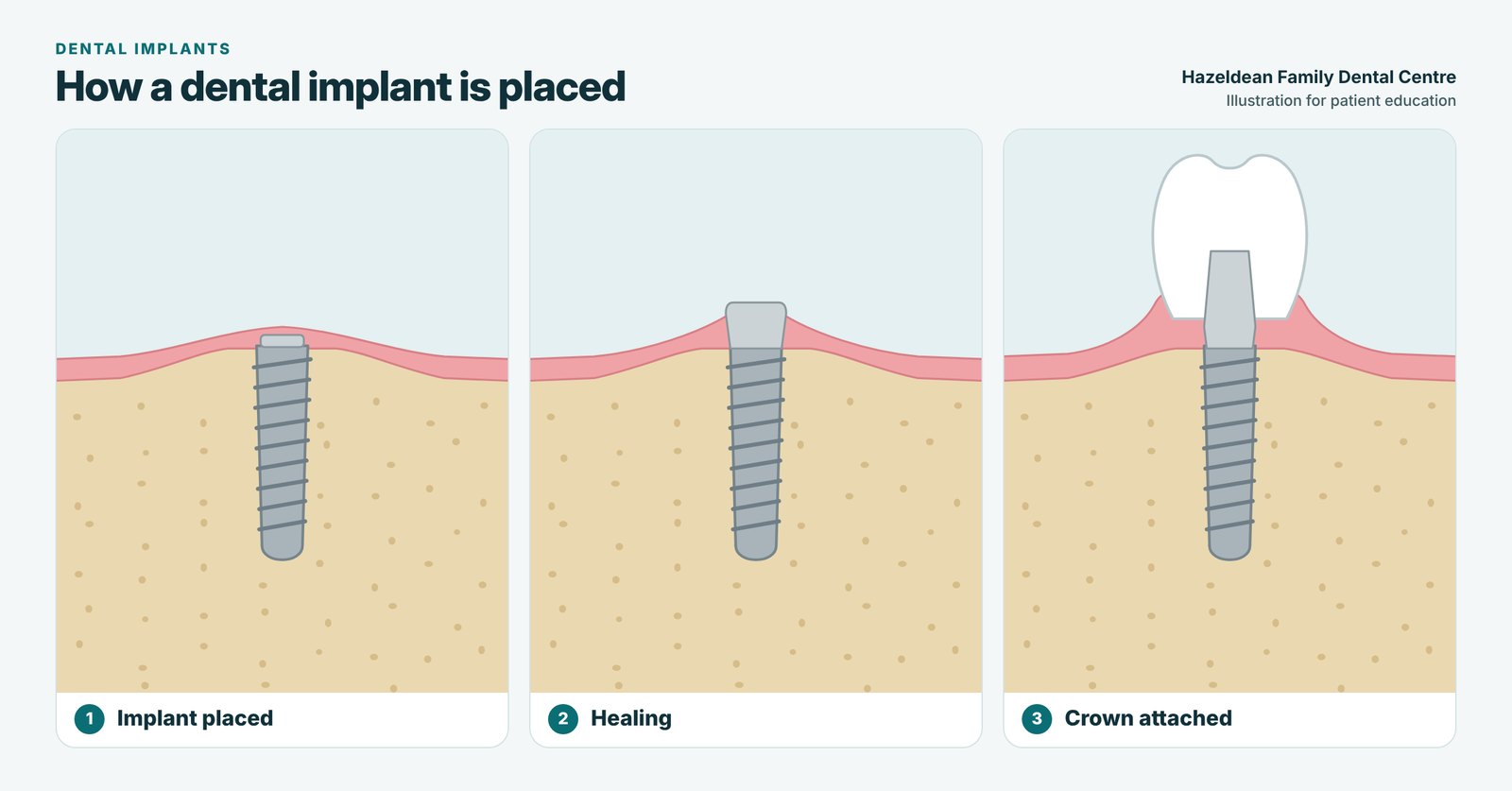
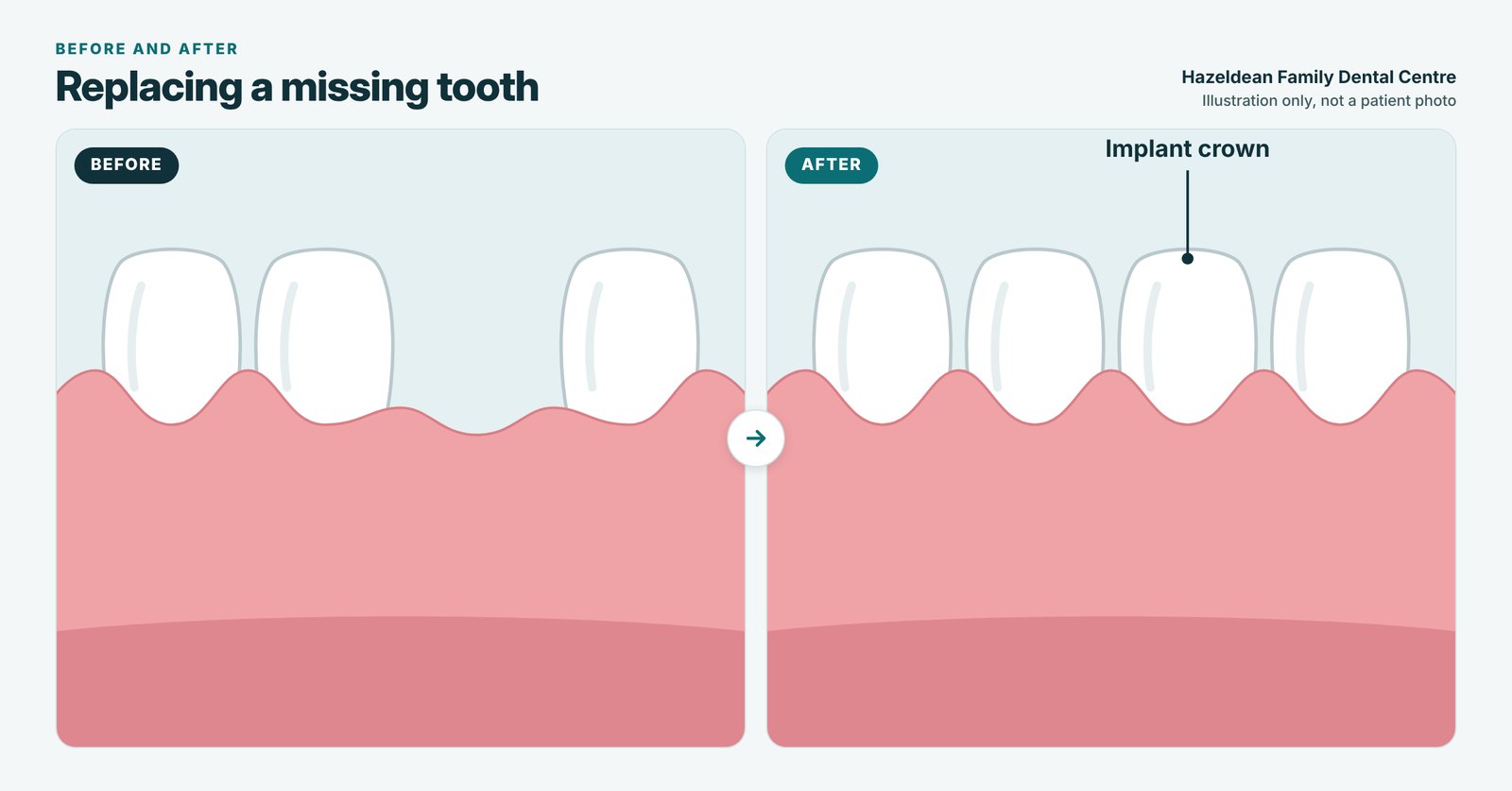
Simple drawings we use to explain treatment. Select one to read more.
Home-care guides
After a tooth extraction
- Bite firmly on the gauze for 30 to 45 minutes to help a clot form.
- For the first 24 hours, don't rinse, spit forcefully or drink through a straw. Avoid smoking for at least two to three days.
- On the first day, hold a cold pack on your cheek, 15 minutes on and 15 minutes off.
- Eat soft, cool foods and chew on the other side.
- From the next day, rinse gently with warm salt water (half a teaspoon of salt in a cup of water) after meals.
- Call us if bleeding doesn't slow with pressure, swelling gets worse after the third day, pain increases after a few days, or you develop a fever.
Caring for a dental implant
- For the first few days, eat soft foods, chew on the other side and follow your rinse instructions. Avoid smoking, which slows healing.
- Once healed, brush twice a day with a soft brush and clean around the implant every day with floss, a small interdental brush or a water flosser, as we show you.
- Keep up your cleanings and check-ups. Tell us if the gum around your implant bleeds, swells or feels tender.
Bleeding gums: what it means
Bleeding when you brush or floss is usually a sign of inflammation from plaque along the gumline (gingivitis).
- Brush gently twice a day, angling the bristles toward the gumline.
- Floss or use interdental brushes every day, even if there's some bleeding at first. Bleeding from gingivitis often settles within one to two weeks.
- Book a visit if bleeding continues after two weeks, your gums are pulling back, teeth feel loose, or bad breath won't go away. More about gum treatment.
Brushing your child's teeth
- Start brushing as soon as the first tooth appears, twice a day, with a soft children's toothbrush.
- Use a smear of fluoride toothpaste the size of a grain of rice under age 3, and a pea-sized amount from age 3 to 6.
- Help with brushing until your child can do it well on their own, usually around age 7 or 8.
- Offer water between meals, keep sweet foods to mealtimes, and don't put a baby to bed with a bottle of milk or juice.
Sensitive teeth
Common causes include gum recession, worn enamel, a cavity or crack, and recent whitening.
- Try a toothpaste for sensitive teeth for a few weeks, and brush gently with a soft brush.
- Cut back on acidic drinks such as pop, juice and sports drinks.
- Book a visit if one tooth is sensitive, the feeling lingers after hot or cold, or it hurts to bite.
These guides are general information. Follow the specific instructions your dentist gives you, and call us if you're unsure.