
Gum recession & gum grafting
Gum recession means the edge of the gum has moved away from its normal position, exposing part of the tooth root. We assess the cause and, when it's the right choice, Dr. Azadi provides gum grafting here in our office.
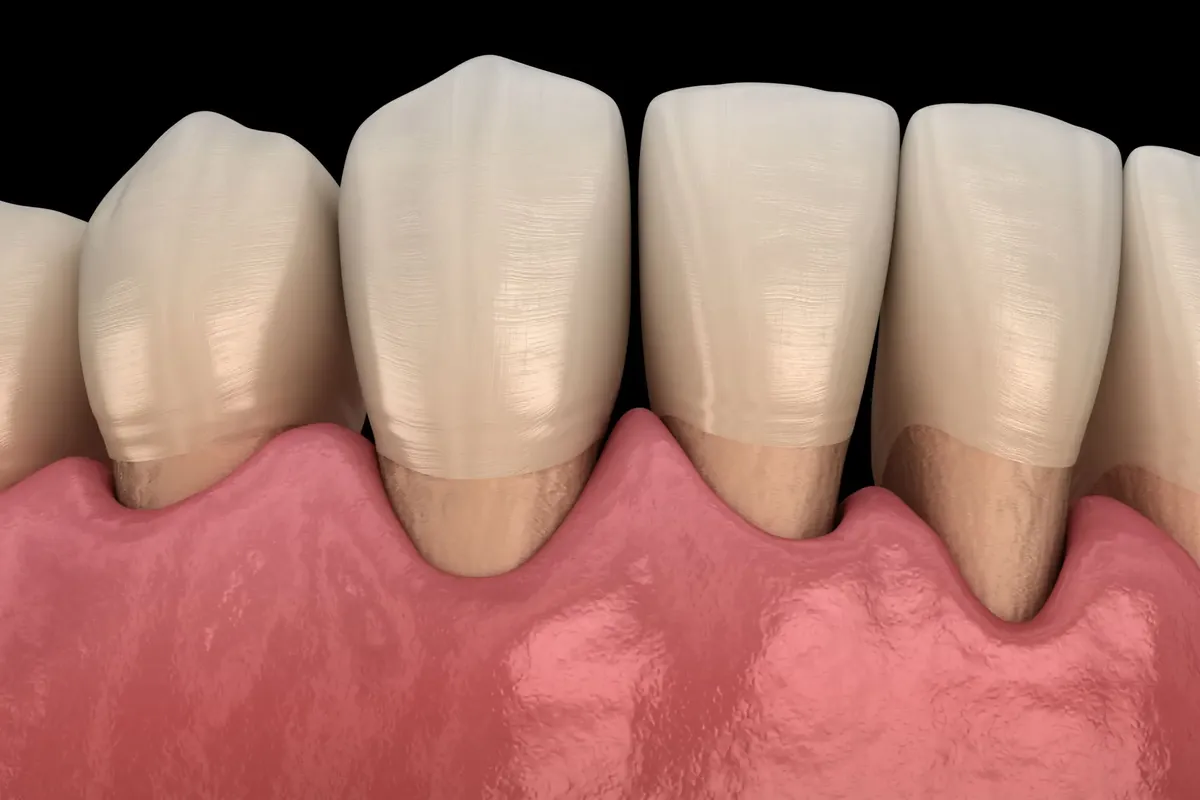
What is gum recession?
Healthy gum tissue covers and protects the root of each tooth. When the gum recedes, part of the root is exposed. Recession may affect one tooth or many, and it can happen with healthy-looking gums, inflamed gums, gum disease, thin tissues, or a combination.
Early assessment helps identify the cause, limit further damage, and decide whether monitoring, non-surgical care or grafting is appropriate.
Why do gums recede?
Gum recession usually has more than one cause, and several can be present at the same time.
- Gum disease and inflammation
- Plaque-related inflammation can damage the attachment and bone that support the teeth. Recession may be one sign of this.
- Thin gum and bone
- Some people naturally have thin gums, or a tooth positioned near the outer edge of the bone. These sites are more vulnerable.
- Brushing too hard, and oral habits
- Heavy pressure, scrubbing side to side, hard bristles, or habits that injure the gum can contribute.
- Tooth position and orthodontic movement
- Crowded, rotated or prominent teeth may have less tissue covering the root.
- Frenum or muscle pull
- A tight frenum (the small fold of tissue that attaches the lip or cheek to the gum) can pull on the gum edge and make cleaning hard. This may need treatment called a frenectomy.
- Fillings, crowns and local irritation
- Fillings or crowns that extend under the gum, piercings, and other local factors can irritate the tissue or make cleaning harder.
- Smoking and nicotine
- Tobacco is linked to poorer gum health and slower healing, and can make surgical results less predictable.
- Age
- Recession becomes more common with age, as the effects of anatomy, inflammation and wear add up over time.
Recession isn't always caused by brushing too hard, and it isn't automatically a sign of gum disease. An examination is needed to find the likely cause.
What problems can gum recession cause?
- Sensitivity
- The exposed root can react to cold air, drinks, brushing, or sweet and acidic foods.
- Root decay
- Root surfaces are much softer than enamel and can be more prone to cavities, especially with a dry mouth or frequent sugar.
- Notches near the gumline
- Wear, acid and stress can create notches or "steps" that make full root coverage harder.
- Further recession
- Some sites stay stable, while others keep receding, especially with ongoing inflammation, thin tissue or trauma.
- Appearance
- Teeth may look longer, uneven or darker near the gumline, and spaces between teeth can become more noticeable.
- Harder cleaning
- An uneven gumline or a sensitive root can make cleaning uncomfortable.
What if it isn't treated?
Not every recession needs surgery. Some can be monitored safely once the cause is controlled. Others may get worse:
- The root may stay sensitive or become more sensitive.
- Root decay or wear may become harder to repair.
- The recession may progress, particularly if inflammation or trauma continues.
- Future root coverage may be less predictable if tissue between the teeth is lost.
- Untreated gum disease can continue to damage the gum attachment and bone.
Either way, "no treatment" shouldn't mean "no follow-up". We'll keep an eye on it with you.
How we assess gum recession
- How deep and wide the recession is, and how thick the gum is
- Inflammation, plaque, pocket measurements and bone levels
- The attachment and bone between the teeth
- Tooth position, bite, orthodontic history and frenum pull
- Sensitivity, cavities, wear, and existing fillings or crowns
- Whether the recession is stable or getting worse
- Your goals: comfort, prevention, appearance, or preparing for other treatment
What is a gum graft?
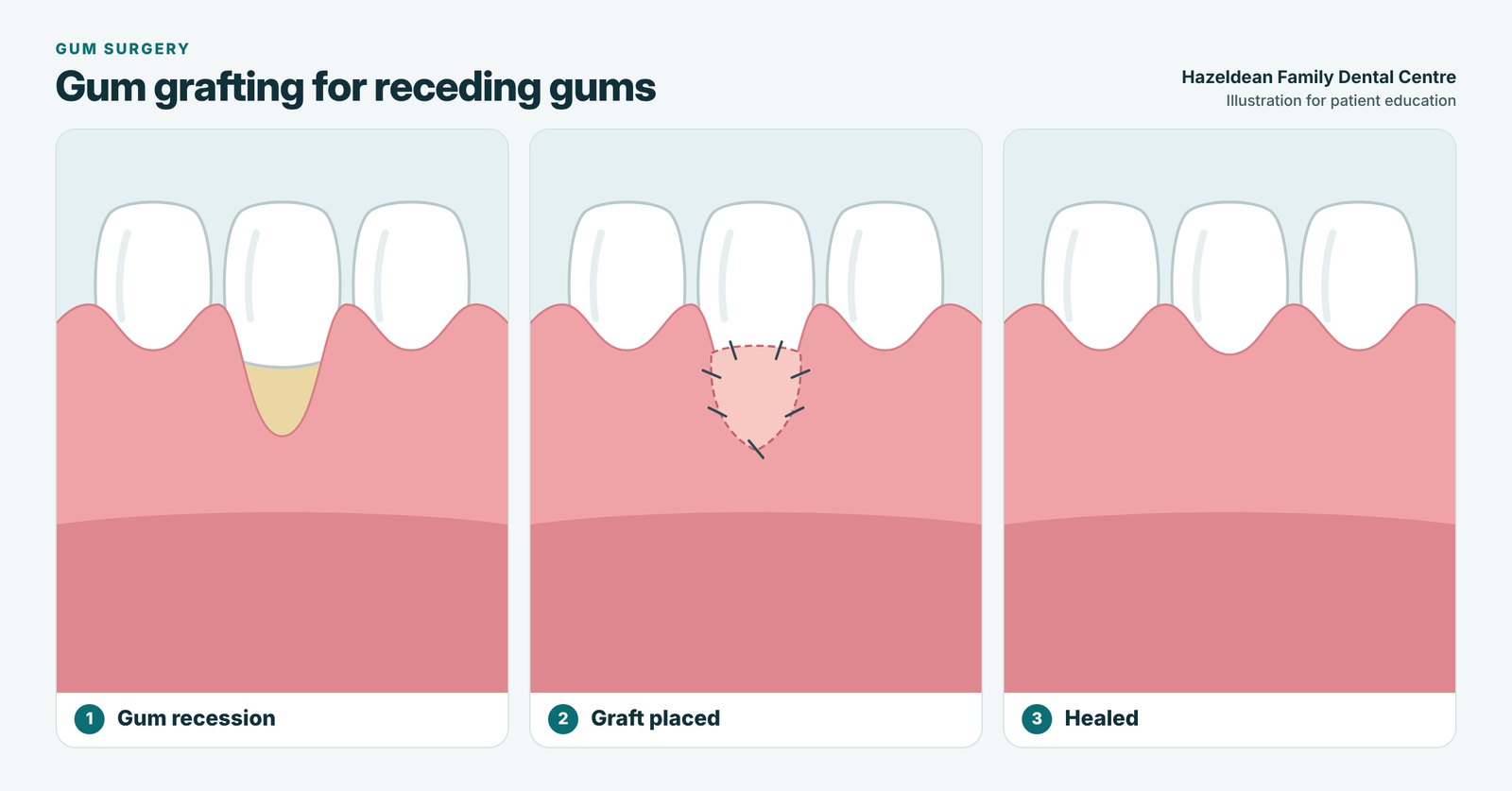
"Gum graft" is a general term for minor gum surgery that adds tissue, moves the existing gum over an exposed root, or both. The technique is chosen for your particular situation.
- Connective tissue graft
- A thin layer of tissue is taken from beneath the surface of the palate (the roof of your mouth) and placed under the gum at the recession site. It is one of the most common approaches for covering exposed roots.
- Free gingival graft
- A small piece of surface tissue from the palate is moved to an area with very little firm gum. Its main goal is usually to make the gum thicker and more resilient; root coverage and colour blending can be less predictable.
- Donor tissue
- In some cases, donor material can be used instead of tissue from your palate, which avoids a second treatment site.
Who it can help
- Teeth that look longer, or have roots showing near the gumline
- Sensitivity to cold at the gumline
- Thin gum that keeps receding
- Recession that makes cleaning uncomfortable
- Preparing for orthodontic or restorative treatment in a thin-gum area
You don't need a referral. You can book a gum assessment with us directly.
What happens with gum grafting
- AssessmentWe measure the recession, check your bite and brushing habits, and explain whether grafting is recommended.
- PlanningWe choose the graft type with you: tissue from the roof of your mouth, or a donor-tissue option.
- The procedureUnder freezing, the graft is placed over the exposed root and held with fine stitches. Visit length depends on how many teeth are treated.
- Follow-upWe check healing and remove stitches if needed, usually within about two weeks.
What results can I expect?
- The main goal is often thicker, firmer gum and a more stable gumline, depending on the case.
- Complete root coverage is most predictable when there is little or no bone loss between the teeth and the root and surrounding tissue are favourable.
- Notches in the root, bone loss between the teeth, smoking, plaque and difficult anatomy can limit the result.
- No dentist can guarantee 100% root coverage or a perfect colour match. We'll tell you what is realistic for your teeth before you decide.
Before and after: gum grafting
These are photos of actual gum grafting cases. In each pair, the yellow ring marks the treated area: the receded gum and exposed root in the Before photo, and the same spot in the After photo.
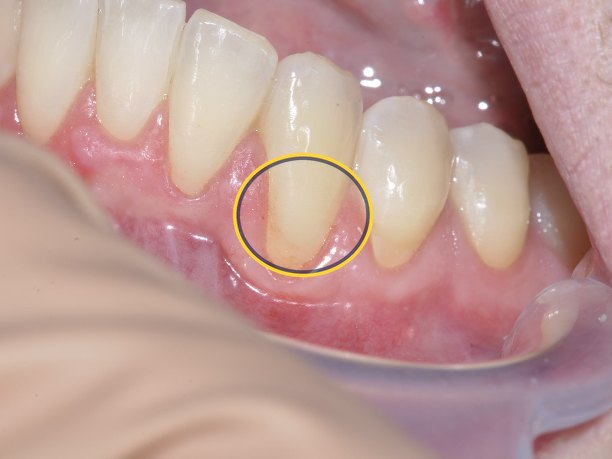
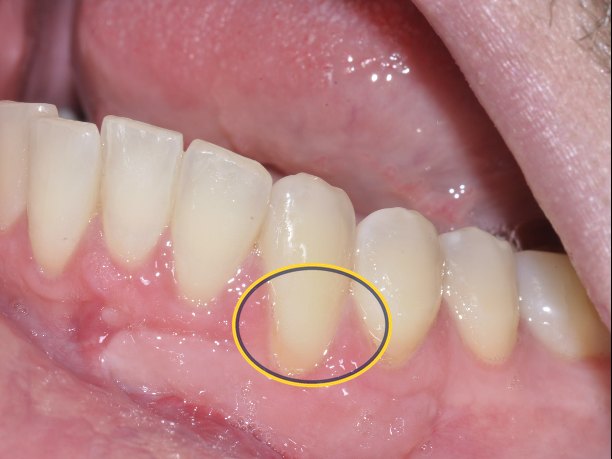
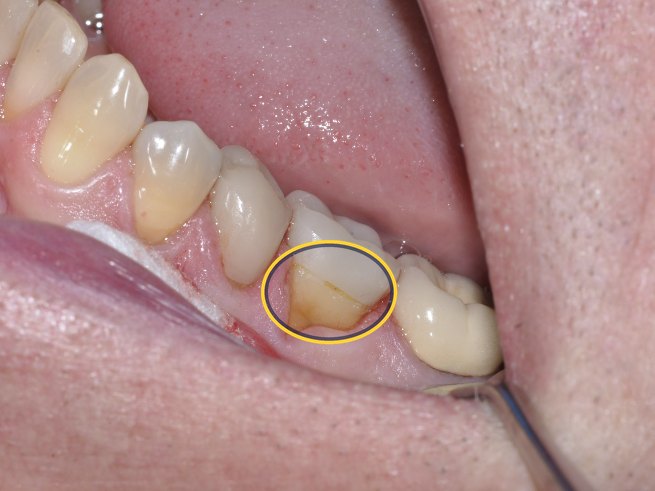
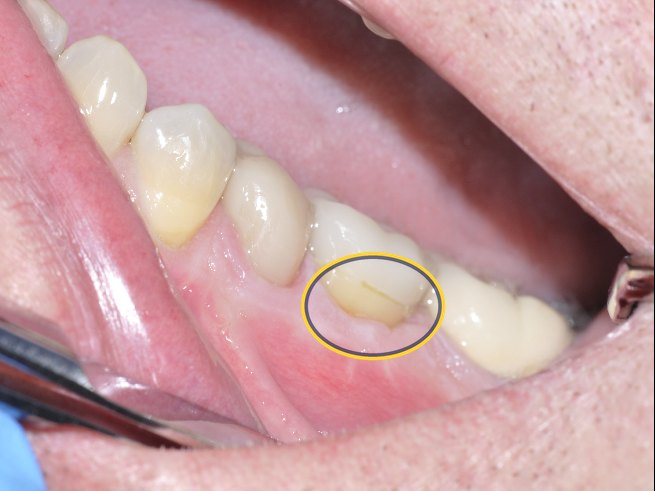
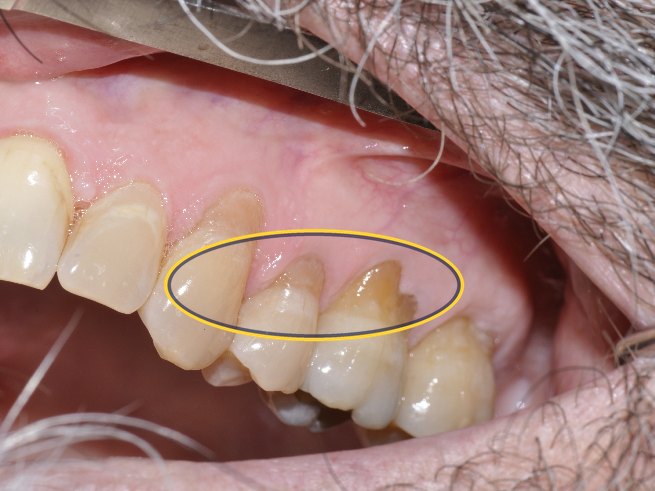
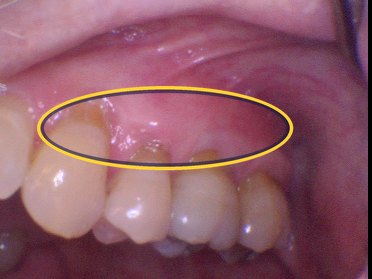
Actual patients. The photos are not retouched; only the yellow ring was added. Every mouth is different and results vary from person to person. These photos show individual cases and are not a promise of the same result for you.
Possible risks and limitations
- Temporary discomfort, swelling, bruising, bleeding or sensitivity
- Soreness in the roof of the mouth when your own tissue is used
- Graft shrinkage, partial coverage, relapse, or differences in colour or texture
- Infection, delayed healing or graft loss (uncommon, but possible)
- Further treatment may be needed for remaining sensitivity or root defects
Recovery and aftercare
Expect tenderness for several days, especially if tissue was taken from the roof of your mouth. Eat soft, cool foods, chew on the other side, and don't brush the graft until we tell you to; we'll give you a rinse to use instead. The surface heals in one to two weeks, and the new tissue keeps maturing for several weeks after that.
Questions to ask at your consultation
- What is the most likely cause of my recession?
- Is it stable or getting worse?
- Is there gum disease or bone loss?
- What is the main goal of treatment in my case?
- Would non-surgical care or monitoring be reasonable?
- Which grafting technique do you recommend, and why?
- How much root coverage is realistic?
- Will tissue come from my palate, or will donor material be used?
- How should I clean the area before and after treatment?
- How could smoking, medications, orthodontics or my bite affect healing?
Take it home: our printable patient guide, Understanding Gum Recession & Gum Grafting.
Open the guide (PDF)Common questions
Does gum grafting hurt?
The area is frozen during treatment. Afterwards, the roof of the mouth is often the sorest spot when tissue is taken from there, which is one reason a donor-tissue option may be suggested.
Will a graft cover my whole root?
It depends on the bone and gum around each tooth. We'll explain what is realistic for your teeth before you decide.
How long does a gum graft take to heal?
The surface heals in about one to two weeks; the tissue keeps maturing over the following weeks.
Can recession be monitored instead?
Sometimes, yes. If the cause is controlled and the recession is stable, monitoring at your regular visits may be reasonable.
Dr. Anahita Azadi Boroujeni, DDS, Dr. Cynthia Simon, DMD, and Dr. Kyra de Gouw, DMD, are general dentists registered with the Royal College of Dental Surgeons of Ontario. This page is general information. Your treatment is planned after an examination.